Cable Park Rules & Etiquette: Wakeboard Safety Guide
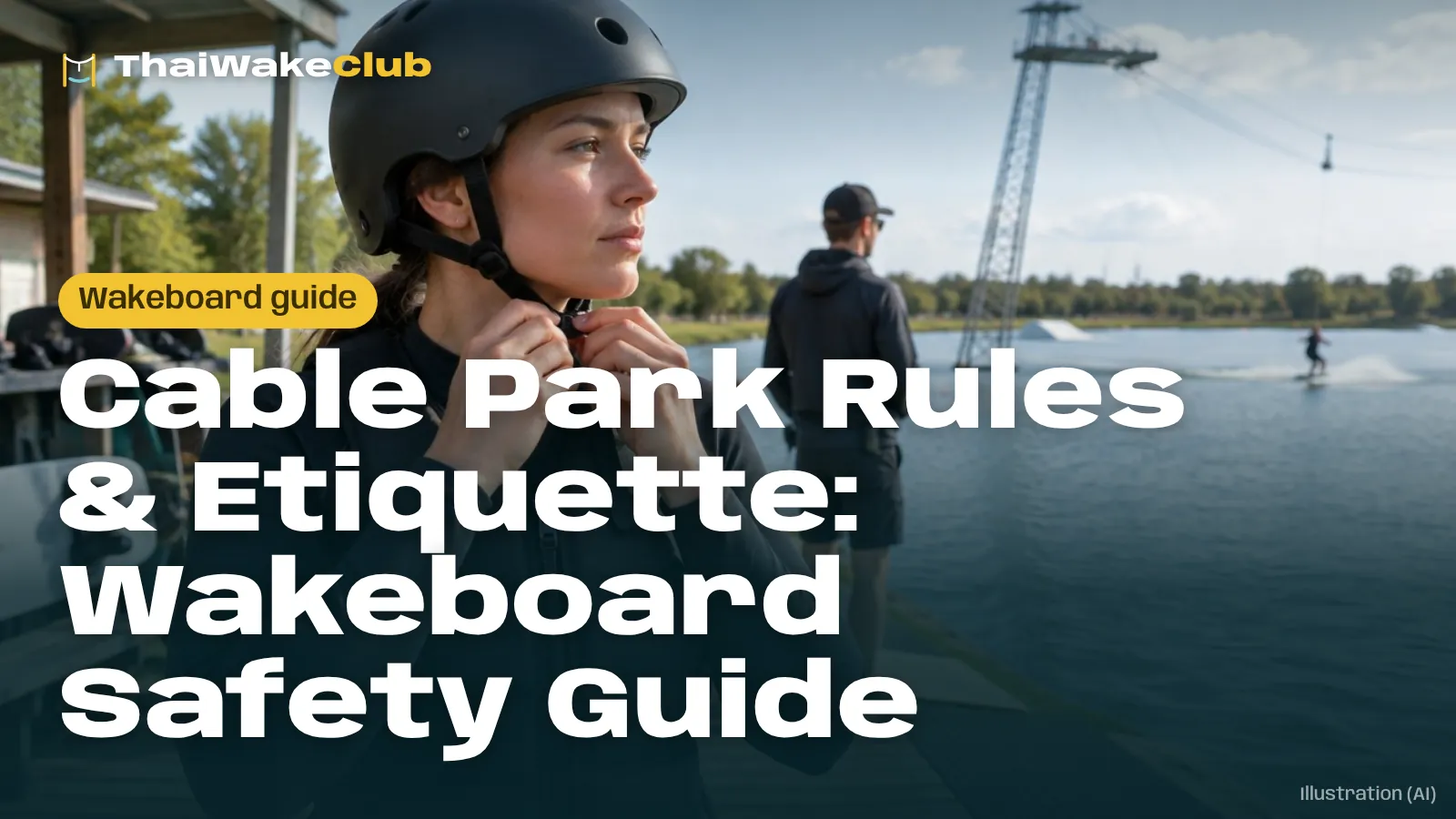
Cable park rules come down to a few habits: let go of the handle before you crash or reach a tower you cannot ride, swim straight to the side after a fall, stay out of the cable's path and wait your turn on the dock. Everyone wears a vest, and the operator's word is final.
This guide explains standard cable park rules and etiquette, the gear you need, swimming, heat and lightning safety, rules for kids and a quick note on insurance for visitors. Each park adds its own rules, so always listen to the briefing on the day.
The core cable park rules
Let go early
The single most important rule is to let go of the handle when you are falling or cannot make it. On a full-size cable, let go before a tower if you are off balance, too wide or too slow to make the corner. Hanging on while you fall can twist your shoulders, drag you across the water or pull you into the path of the next rider. Once released, the handle carries on around the cable by itself.
Swim to the side, fast
After a fall, check what is coming, then swim directly to the nearest bank, away from the cable line. Do not swim along the line or try to grab the next handle. If you cannot get out, raise one arm so staff and riders can see you. On most full-size cables you then walk back to the start dock along the bank.
Keep out of the line
The cable line is the path riders follow under the cable. Never swim, float or stand in it. Riders coming behind you may not see you in time, especially near corners and obstacles.
Respect the queue
The start dock is busy. Join the queue in order, have your board and bindings on before your turn, and do not jump ahead after a fall. Some parks run separate queues for beginners or for riders with their own gear; follow the signs and staff.
Carrier pickup
Staff clip your handle onto the carrier and tell you when to go. Keep your arms straight, knees bent and let the cable pull you; do not yank the handle. If the start fails, let go immediately and clear the dock area.
Obstacle priority
On features, the rider in front has priority. Do not hit an obstacle if someone is still on it or has fallen nearby. If you fall on or near a feature, move away from it quickly. Only ride obstacles once you are comfortable on flat water and the park allows it; many parks set aside certain features for advanced riders.
Listen to the operator
The operator controls the speed and can stop the cable. Signals vary by park, so ask during the briefing. When the cable stops, stay calm, let go and swim to the side.
Gear and swimming
| Item | Rule of thumb |
|---|---|
| Vest | Mandatory on the water at Thai parks. Beginners and weak swimmers should use a full life jacket, not a thin impact vest. |
| Helmet | Strongly recommended for everyone; essential on obstacles. Some parks include one. |
| Board and bindings | Check screws and binding fit before riding. Ask staff for a different size if your heel lifts. |
| Rash guard | Protects from sun and minor scrapes. |
| Jewellery | Remove rings, necklaces and watches, which can catch or get lost. |
You do not need to be a strong swimmer, because the vest keeps you afloat, but you must be comfortable in the water and able to move yourself to the bank. Tell staff if you cannot swim. For sizing gear, see our wakeboard size guide.
Sun, heat and hydration
Thailand is hot all year, and the water reflects sunlight. Practical habits:
- Drink water between every set, not only when you feel thirsty.
- Use reef-safe or water-resistant sunscreen and a rash guard; reapply after a few sessions.
- Take shade breaks, especially from 11:00 to 15:00 between March and May.
- Signs of heat exhaustion include dizziness, headache and nausea. Stop, cool down and drink.
- Consider an evening session at a floodlit Bangkok park. See best time to wakeboard in Thailand.
Lightning and weather
Cable parks have tall metal towers over open water, so lightning is a serious danger. Parks stop the cable when storms approach.
- If you hear thunder, get out of the water and go into a proper building.
- Do not shelter under towers, lone trees or open-sided shelters.
- Wait until staff restart the cable, typically around 30 minutes after the last thunder.
- Strong wind also makes riding harder; the hourly strip on each ThaiWakeClub park page turns red for thunderstorms and high winds.
Rules for kids
Most parks welcome children with a vest and supervision, but rules vary. At Thai Wake Park Lumlukka, the Intro Kid Lesson is for ages 6-14 or riders under 150 cm, runs on the training cable, and costs 1,595 THB per hour (+300 THB for a sibling or friend), booked via LINE. ESC Thai Wake Park offers the same lesson for ages 6-14 (prices as of October 2026). Beginner-focused 2-tower parks such as Neverdry Wakepark and WakeGarden Wake Park let staff control the speed, which helps with kids. Confirm age and height limits with the park. More in wakeboarding for kids.
- Kids should always wear a properly fitted life jacket and helmet.
- An adult should stay on the bank and watch.
- Start on low speed or a 2-tower cable, never the full-size cable on day one.
Insurance note for visitors
Wakeboarding carries a real risk of strains, sprains and occasionally more serious injuries. If you are visiting Thailand, check that your travel insurance covers water sports and cable wakeboarding, as some policies exclude them or need an add-on. Parks usually ask you to sign a waiver. Keep your policy number and the park's address handy.
Quick checklist before you ride
- Listen to the safety briefing and ask about signals.
- Fit your vest snugly and wear a helmet.
- Start on the beginner or 2-tower cable; read our beginner guide.
- Let go when in doubt, then swim straight to the side.
- Drink water and watch the sky.
New words like "carrier" or "kicker"? Check our wakeboard glossary.
FAQ
When should I let go of the handle at a cable park?
Let go whenever you are falling, cannot make a corner, are about to hit someone or something, or staff tell you to. Releasing early is safer than holding on.
Do I need to be able to swim to wakeboard?
You must wear a vest, which keeps you afloat, so you do not need to be a strong swimmer. You should be comfortable in water and able to get to the bank. Tell staff if you cannot swim.
Are helmets mandatory at Thai wake parks?
Rules vary. Helmets are strongly recommended for everyone and often required on obstacles. Some parks include them in the ticket.
What age can kids start wakeboarding in Thailand?
Thai Wake Park's Intro Kid Lesson covers ages 6-14 (or under 150 cm at Lumlukka). Other parks set their own limits, so confirm with the park.
What happens if it starts to thunder?
The park stops the cable. Leave the water, go inside a building and wait for staff to restart, usually about 30 minutes after the last thunder.