Cable vs Boat Wakeboarding: Differences and Which to Pick
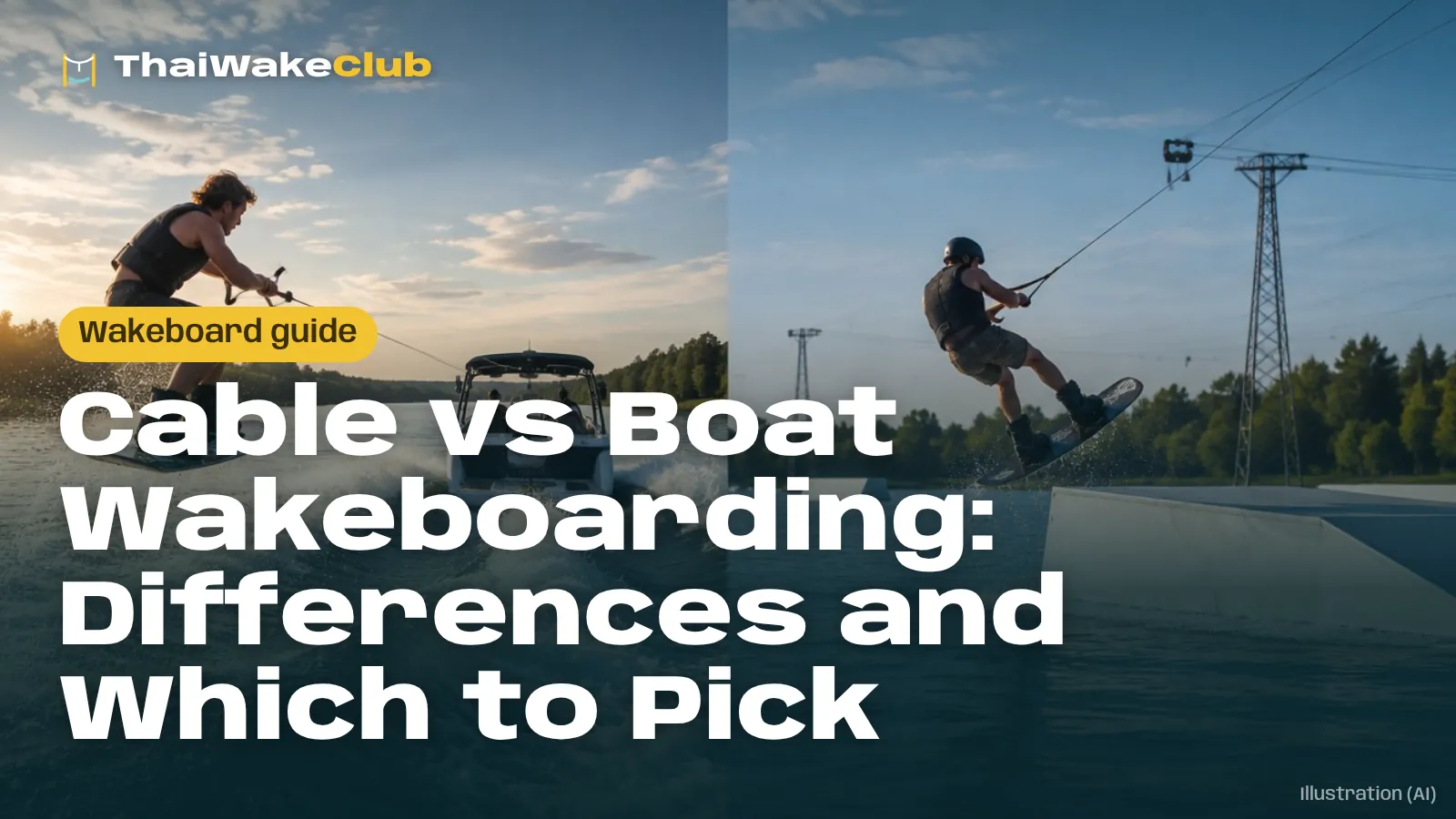
Cable vs boat wakeboarding comes down to what pulls you. A cable park tows you from an overhead cable around a lake, with ramps and rails to ride. A boat tows you on a long rope behind its own wake, which you use as a jump. In Thailand almost all wakeboarding happens on cables, which are cheaper per ride, easier to reach and great for learning.
This guide compares the two, explains the two kinds of cable you will meet in Thailand (full-size and 2-tower System 2.0), and lists which parks use each type based on official information and our research as of October 2026.
Cable vs boat at a glance
| Cable wakeboarding | Boat wakeboarding | |
|---|---|---|
| What pulls you | Overhead cable on towers | Boat with a tow rope |
| Angle of pull | From above, several metres up | Low, from the boat's tower or pylon |
| What you ride | Flat water plus kickers, boxes and rails | The boat's wake (and flat water) |
| Riders at once | Several on a full-size cable; usually one per line on a 2-tower | One rider per boat run |
| Cost model | Time ticket or hourly slot | Boat hire, fuel and driver, usually per hour or per set |
| Fall recovery | Swim to the side and walk back to the dock (full-size), or restart from the dock (2-tower) | The boat circles back for you |
| Thailand availability | 15 parks in our directory | Limited; ask operators locally |
Key differences
The pull
On a cable, the line comes from above, so it lifts you slightly. This helps when getting up and makes ollies feel lighter, but it also means sharp cuts can make the line go slack. A boat pulls from low behind you on a much longer rope, so the pull is steady and flatter, and you load up against the wake for height.
The speed is similar. Phuket Wake Park's main cable runs at roughly 26-30 km/h according to our research. Boat riders choose their own speed with the driver.
Wake vs obstacles
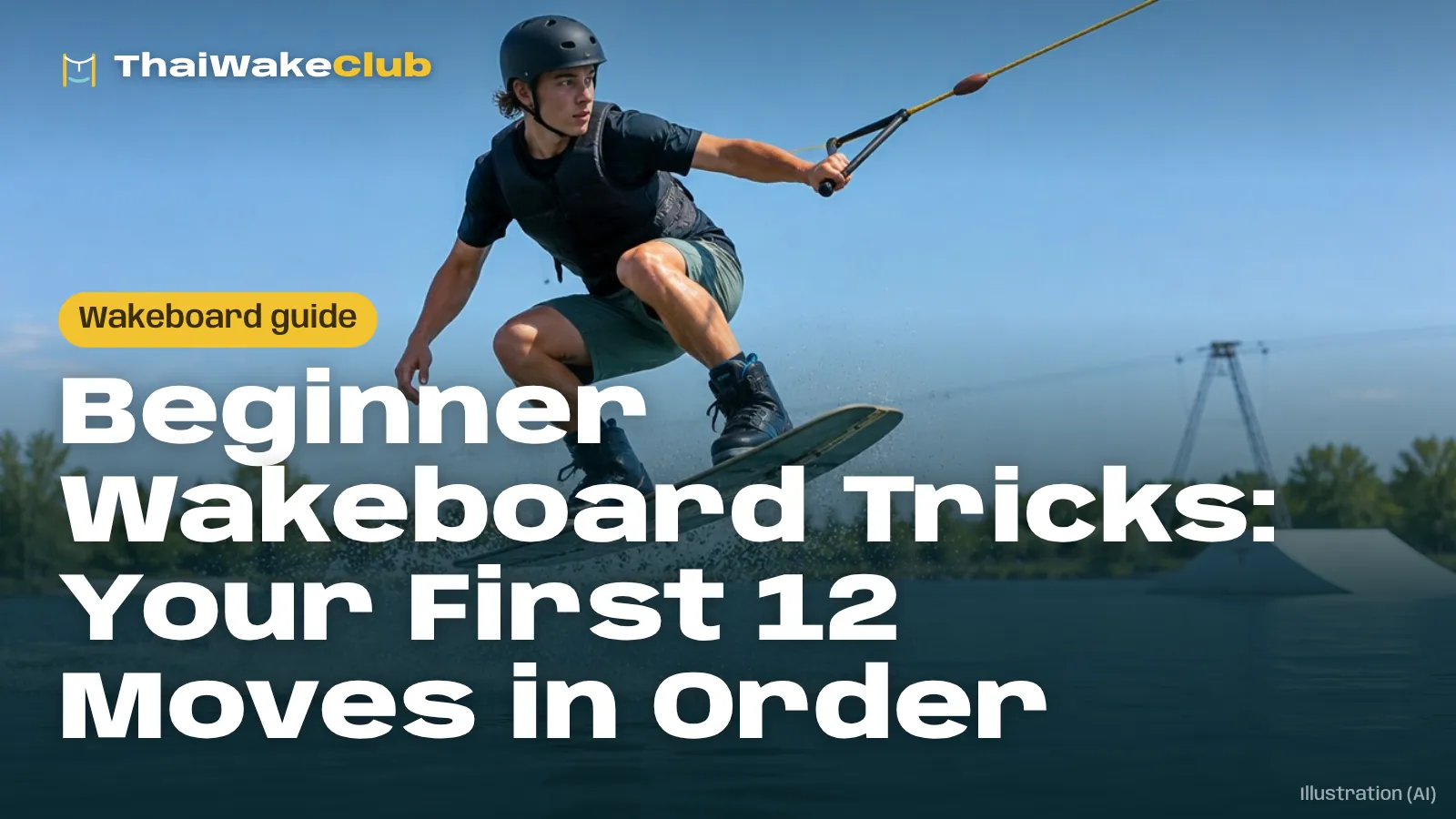
This is the biggest difference. Boat riding is about the wake: you cut out wide, then edge hard into the wake for air. Cable riding is about the park: kickers, fun boxes, rails, A-frames and pipes. Big Thai cables list plenty of these, for example 20+ features at Thai Wake Park Lumlukka and 15+ at ESC Rangsit. You can still get air on a cable using ollies and kickers, but the style is different, and the tricks don't all translate.
Cost
A cable is shared, so the cost per person is low. As of October 2026, 2 hours on the main cable costs 850 THB at Lumlukka and ESC, and Taco Lake charges 400 THB until 18:00. A boat session means paying for the boat, fuel and a driver, so per-hour costs are usually much higher unless a group shares them. We do not list boat prices because we have not verified any; ask the operator directly. See our wakeboarding price guide for cable prices.
Learning curve
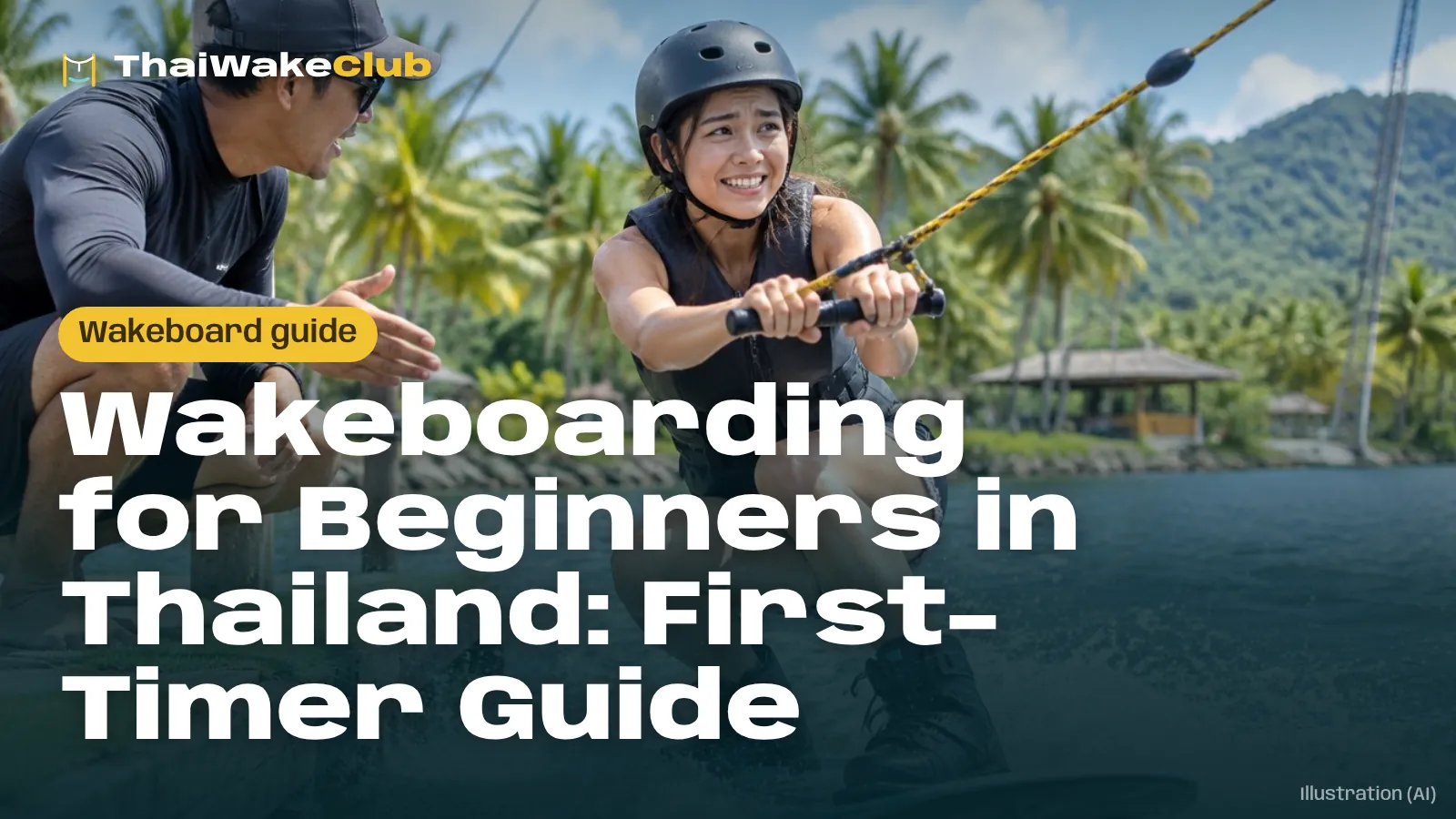
Cables are generally easier for first-timers. The speed is constant, many parks have a separate slow beginner line, and a coach often stands on the dock. Boats are also good for learning, because the driver can adjust the speed and the boat comes back each time you fall. The difference is that every fall costs boat time.
The trade-off on a full-size cable is that falling means swimming to the side and walking back to the start.
Board choice
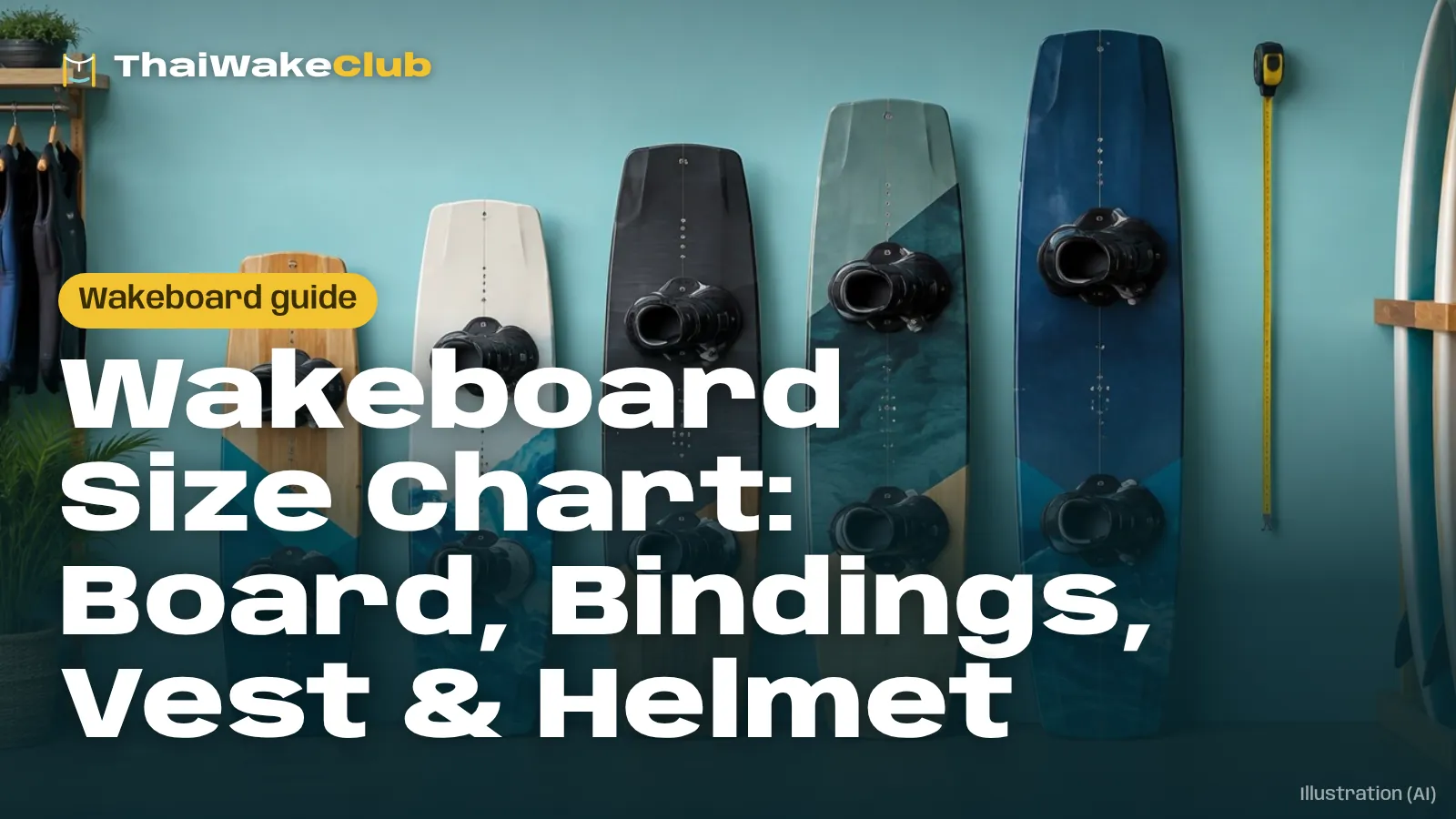
- Cable boards are usually more flexible, with a tough base for sliding on features and small or no fins. Flex makes ollies and presses easier.
- Boat boards are usually stiffer, with more rocker and deeper fins, for a firm "pop" off the wake and grip on hard edges.
- Starting out: at most Thai parks the rental beginner board is fine. If you buy, choose a cable board. Our wakeboard size guide covers sizing.
Full-size vs 2-tower System 2.0 cables
Thailand has both types of cable, and they feel very different.
Full-size cable
A large loop, often five towers, around a lake that tows several riders at once with carriers spaced along the cable. You buy time (for example, 2 hours) and ride lap after lap through the obstacles. Phuket Wake Park's main cable, for example, is about 680-700 m long according to our research.
- Good for: riding a lot for your money, practising obstacles, and riding with friends.
- Downsides: you cannot change the speed for one rider, and falling means walking back.
2-tower System 2.0
A straight line between two towers. One rider at a time rides out and back as the operator runs the cable forwards and in reverse, and the operator also sets the speed. Lines are short: for example, the beginner System 2.0 at Lumlukka is about 180 m and the 2.0 line at Pattaya is about 295 m.
- Good for: first rides, coaching, and private group sessions. Most charge by the hour and often include a coach.
- Downsides: you spend some time waiting, and each run is short.
Many big parks have both: a 2-tower line for learning and a full-size cable once you can ride. Our beginner guide explains how to use them.
Why Thailand is a cable country
Thai wakeboarding grew around cable parks, starting with Thai Wake Park in 2009. A few reasons why cables suit the country:
- Cost: sharing one cable is far cheaper per rider than running a boat.
- Water: man-made lakes and ponds near cities give flat, sheltered water all year, while the sea is often choppy, especially in the rainy season.
- Access: parks near Bangkok sit within about 12-40 km of an airport, and you can just turn up with a ticket.
- Features: parks compete on obstacles, which has created a strong park-riding scene and international events such as the IWWF Worlds in 2022 and the 2025 SEA Games at ESC.
Boat wakeboarding does exist in Thailand, but we have not verified any boat operators for this directory. Chilling Cable Ski was mentioned with boat wakeboarding in a 2023 review, but its current offer is unconfirmed, so contact the park.
Which should you choose?
- First time, or on a budget: go to a cable, starting with a 2-tower or a beginner lesson.
- You want to ride obstacles: choose a full-size cable with plenty of features.
- You want big wake jumps or wakesurfing: look for a boat, and expect to pay more and to plan ahead.
- A private group with a coach: book a 2-tower park by the hour.
Thai parks by cable type
Full-size cable (most also have a 2-tower training line)
| Park | Region | Also has 2-tower? | Note |
|---|---|---|---|
| Thai Wake Park Lumlukka | Bangkok | Yes, two | Night riding to 22:00 |
| ESC Thai Wake Park | Bangkok | Yes | Night riding to 22:00 |
| Taco Lake | Bangkok | No | Beginner kneeboards on the main cable |
| Zanook Wake Park | Bangkok | No | Status to confirm with the park |
| Thai Wake Park Pattaya | Pattaya | Yes | Low Speed Session 450 THB |
| Phuket Wake Park | Phuket | Yes | About 680-700 m main cable |
2-tower System 2.0 only
| Park | Region | Note |
|---|---|---|
| WakeGarden | Bangkok | Speed-controlled, beginner focus |
| Neverdry | Bangkok | Shallow beginner pool |
| Varapa | Bangkok | Two lines: green and red |
| Little Plant | Suphan Buri | Status to confirm with the park |
| Chilling Cable Ski | Chonburi | Status to confirm with the park |
| Kite Cable Thailand | Pranburi | Two independent lines |
| Sport Wake Park Phuket | Phuket | 2-tower confirmed; full-size unclear, so confirm with the park |
| Lakehouse CNX | Chiang Mai | Private hire |
| Canyon Wake Park | Chiang Mai | Unconfirmed for 2026 |
FAQ
Is cable wakeboarding easier than boat?
For most beginners, yes. The constant speed, slow training lines and coaches on the dock make the first stand-up easier. The main drawback is walking back after a fall on a full-size cable.
Can I learn tricks on a cable and use them behind a boat?
Many basics carry over, such as edging, riding switch, surface spins and grabs. Wake jumps feel different because the boat's wake gives you a ramp of water rather than a kicker.
Is a cable board different from a boat board?
Yes. Cable boards are more flexible, with tougher bases and small fins, while boat boards are stiffer, with more rocker and deeper fins. Rental boards at Thai parks are made for cable riding.
Why are there so few wakeboard boats in Thailand?
Boats cost much more to run per rider, and city lakes suit cables. The sea is also often too choppy. Most Thai riders learn and progress at cable parks.
What is a System 2.0 cable?
A straight cable between two towers that tows one rider forwards and back, with the operator controlling the speed. It is the usual beginner and private-hire setup in Thailand.